Showing posts with label Civilisation. Show all posts

Monday, 1 April 2024

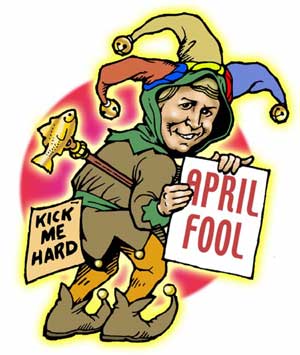
April Fools' Day


I'm sure all of you have heard of pranks, jokes and the rest, but most of you don't really know where it comes from. 


First, do the following quizz to check how much do you know about jokes and vocabulary related to it. CLICK ON THIS PUN TO FIND OUT.


Watch the clip from ASK HISTORY and answer the questions. click here


So, do you have similar celebrations in your country? When do they take place?

In Spain, the 28th December, we celebrate the Innocents' Day, in which people play tricks on the rest. 


Monday, 14 February 2022

Super Bowl


The Super Bowl is a special American football game played every year at the end of the National Football League (NFL) season. It is the third biggest annual sporting event on the planet.

Super Bowl Sunday is the day that the two winning teams from the play-offs play in the Super Bowl, the game that determines the champion of the season

It is a very special event for most football fans, but lots of people who do not like football still watch it for the spots and the half-time show. In 2014 it became the most-watched American TV show in history with an audience approximately of 112 million viewers.

There are two reasons why Super Bowl Sunday is very popular, and they have nothing to do with the sport! Of the 80 million people who watch the game, many of them watch only the Super Bowl, and not the rest of the season. Why do they watch? 

Many people have Super Bowl parties, where friends unite to watch the game, eat, drink, and enjoy each other’s company.
           
One reason has to do with the entertainment. A football game is split into two parts, or halves, separated by halftime. This break between the halves usually has a halftime show. The show often consists of the team’s cheerleaders, who try to get others excited about the game, and a marching band, a musical group associated with the team that marches as they play. On Super Bowl Sunday, the halftime show is a much larger show, with famous singers, dancers, and performers, and draws the attention of many non-football fans watching the Super Bowl. A great example is J..Lo and Shakira's amazing show.


The second reason people love to watch the Super Bowl is the commercials. The commercials during the breaks in the game are some of the best commercials of the year. Advertisers pay up to $3,000,000 for a 30 second advertisement – millions of people watch the Super Bowl, so they can reach a large audience. The ads are very funny, and they are made so that people will remember them for days, weeks, or years to come.

Here you are the 10 best Super Bowl Commercials 2022.

Americans eat more food on Super Bowl game day than on any other day of the year except Thanksgiving and it is usually fast food and all kinds of snacks.

The Pittsburgh Steelers are the team with the most Super Bowl Wins with six victories. 

The Dallas Cowboys and San Francisco 49ers currently are compiting for the second-most Super Bowl wins with five. 

But there are teams that have never played in a Super Bowl, such as Jacksonville Jaguars or Detroit Lions...


Thursday, 5 November 2020

Have you ever heard about the Bonfire Night?

Watch the video and answer the questions below:


1) Who was the King? 
2) Why did they want to kill the king?
3) Did they kill the king?
4) What century was it?
5) Where was Guy Fawkes from?
6) What's the name of the night of the 5th of November in England? 
7) What and how do they celebrate it?
8) What do they say? 
9) Where does this celebration take place?
10) How do you say "bonfire" and "fireworks" in your language? 


-------------------------------------------------------------------------------------------

Let's see if you are right...

Four hundred years ago, the 5th of November 1605 (in the 17th century), a man called Guy Fawkes from York and a group of friends try to kill the King James I by blowing up the Houses of Parliament. 

1) WHO WAS THE KING?

James I was the king at that time.


2) WHY DID THEY WANT TO KILL THE KING?
Because the king was the president of England, but people hadn't voted for him. Also, the main religion was the Protestant religion. Guy Fawkes was a catholic and he wanted more rights for catholics, but James I didn't want to give them any more rights.

3) DID THEY KILL THE KING?
No, they didn't. Guy Fawkes was discovered and taken to the Tower of London. There, he was tortured and they cut his head off.

4) What century was it?

It was the 17th century.

5) Where was Guy Fawkes from?

He was from York. 

6) What's the name of the night of the 5th of November in England? 

Its name is Bonfire Night or Guy Fawkes night.

7) What and how do they celebrate it?

People celebrate it with bonfires and fireworks.

8) What do they say? 

    They say a rhyme that says:

"Remember Remember

the 5th of November

The gunpowder treason and plot


I know of no reason

Why the gunpowder treason

Should ever be forgot"

9) Where does this celebration take place?

It takes place all over Britain.

10) How do you say "bonfire" and "fireworks" in your language? 

Bonfire means sute, su, sutzar in Basque. It means fogata, hoguera, pira in Spanish.


BONFIRE NIGHT or GUY FAWKES NIGHT

Nowadays, people celebrate that Guy Fawkes didn't kill the King with bonfires and fireworks on the 5th of November. They make "Guys" to burn them on the bonfires. 
They say a rhyme that says:

"Remember Remember the 5th of November
The gunpowder treason and plot
 
I know of no reason
Why the gunpowder treason
Should ever be forgot"


Task 1

Let's go through this celebration's hightlights:


Task 2

Now let's revise the Bonfire-Night-related vocabulary


Task 3

Discuss these questions in groups of 3.

• Which festivals in your country remember historical events? The Conmemoration of the battle in Las Navas de Tolosa, in Jaén and Moors and Christians, in Alcoy (Alicante)...

• Do you have any festivals that are similar to Bonfire Night in your country? Yes, we do. The most similar ones are las Fallas, in March in Valencia, and Saint John's Eve, on June the23rd in every town.

• When do you have firework displays in your country? We usually have them during the Festivals.

• Do you think you would like Bonfire Night? Why/ why not? Yes, because it's a bank holiday and people celebrate it outside: they eat, sing and see the firework display.

• Do you think festivals are a good way to remember historical event? Yes, because there are a funny way to remind people of historical events. In fact, it's a way of bringing the past to the present and make the people live the History of their people.


Thursday, 29 October 2020

Happy Halloween to everyone!!!


What do you know about Halloween???

Do you dare to get to know more about this celebration?
If yes, Watch  this presentation!


Do you dare to  live a Halloween experience in Britain?

If yes, Watch this video...


Answer the questions about the video


And now time for a....

                                  Halloween Worksheet


Thursday, 22 November 2018

Tuesday, 1 May 2018

Happy May Day!


International Workers' Day is celebrated on 1st May and is a national holiday in more than 80 countries. (Wikipedia)


Do this Reading Comprehension and find out many interesting facts about this celebration.


And HERE you can find a lot of vocabulary related to Workers' Day.


List of vocabulary items related to 

International Workers Day (May Day / Labour Day) 


Related materials:


Monday, 23 April 2018

International Book Day


How many of the books in this children´s literature map do you recognize? And how many have you actually read? (Find the full list below the map)
Kevade by Oskar Luts for Esthonia
Harry Potter and the Philosopher's Stone for Great Britain
Pippi Longstocking by Astrid Lindgren for Sweden
Le Avventure di Pinocchio by Carlo Collodi for Italy
Le Petit Prince by Antoine de Saint-Exupéry  for France
The Never-Ending Story by Ende for Germany
Heidi by Spyri for Switzerland
Orlovi Rano Lete by Branco Copic for Serbia
Toreadors from Vasyukivka by Nestayko for Ukraine
The Adventures of Tin Tin by Hergé for Belgium
Fada Oriana by Sophia de Mello Breyner Andresen for Portugal
Platero y yo by Jiménez for Spain
Mangas by Penelope Delta for Greece
Kake Make by Lina Zutaute for Lithuania
The Tale of Tsar Saltan by Alexander Sergeevich Pushkin for Russia
Tüskevár by István Fekete  for Hungary
Amintiri din Copilarie by Ion Creanga for Romania
Cufoja dhe Bubi Kacurrel by Gaqo Bushaka for Albania
Pabbi Professor by Gunnar Helgason for Iceland
Jip en Janneke by Anne MG Shmidt for the Netherlands
The Moonmins by Tove Jansson for Finland
Akademia Pana Kleska by Jan Brzechwa for Poland
Slovenské Rozprávky by Pavol Dobšinský for Slovakia
Artemis Fowl and the Time Paradox by Eoin Colfer for Ireland
Den grimme ælling by Andersen for Denmark
Mrs Pepperpot Stories by Alf Prøysen for Norway
Čudnovate zgode šegrta Hlapića by Ivana Brlić Mažuranić for Croatia
Geschichten vom Franz by Christine Nöstlinger for Austria

Click on the image below to get access to An Awesome Book, created by Dallas Clayton, an author and illustrator for his son. The book is about the idea of dreaming BIG and never giving up. Dallas Clayton wants to spread the love of reading all over the world. An Awesome Book is a book for children but I am sure you can learn some vocabulary from it, and it is translated into lots of different languages so if you have a little sibling or cousin, enjoy the book with him/her!


Happy World Book Day!


Friday, 16 March 2018

Happy St. Patrick's Day!


Origins of St. Patrick’s Day and today's celebrations


Fun facts about St. Patrick's Day


  • Despite being the patron saint of Ireland, Saint Patrick is believed to have been born in Great Britain.
  • The colour green did not become associated with St. Patrick’s Day until the 18th century.
  • St. Patrick’s Day is a national holiday in the Republic of Ireland and Northern Ireland.
  • It is estimated that more than 30 million Americans have Irish ancestry.
  • Saint Patrick is said to have used a shamrock as a metaphor for the Holy Trinity during his teachings.
  • Foods associated with St. Patrick’s Day include corned beef, cabbage and potatoes.
  • Although the holiday is associated with Ireland, the largest St. Patrick’s Day parade is held in New York.
  • Pubs in Ireland were actually closed on St. Patrick’s Day until the 1970s!

St. Patrick’s Day Vocabulary

Whether you are out and about on St. Patrick’s Day, or simply learning about the holiday in preparation, you are likely to encounter some unfamiliar words along the way. In order to help you out, we have compiled a quick St. Patrick’s Day vocabulary guide, featuring some of the most common words associated with the celebration.

Shamrock – three-leaf clover, which is used as a symbol of Ireland.
Emerald Isle – nickname for Ireland, coined by the poet William Drennan.
Leprechaun – small mythical creature with magical powers, associated with Ireland.
Fiddle – another name for a violin, featured heavily in traditional Irish music.
Four-leaf Clover – a four-leaf variant of the clover, often viewed as a good luck charm.
St. Paddy’s Day – an informal name for St. Patrick’s Day.
Irish Tricolour – name given to the national flag of Ireland.
Pot of Gold – an imaginary reward, associated with leprechauns and said to be found at the end of a rainbow.
Guinness – a brand of Irish dry stout, which is the most popular alcoholic drink in Ireland.
Shillelagh – a weapon, similar to a club, featured heavily in Irish folklore.